Importance of Construction Site Security in Northern California
Construction projects in Northern California, particularly in densely populated cities like San Francisco, face unique security challenges. The presence of high-value equipment, heavy machinery, and large volumes of materials, combined with the daily movement of contractors, workers, and various suppliers, makes every construction site a sensitive and high-risk environment. Even minor lapses in security management can lead to theft, vandalism, or project delays, resulting in significant financial and time costs.
Effective security goes beyond physical protection; it includes coordination with the urban environment, compliance with safety standards, and managing the project’s interaction with the local community. Establishing clear physical boundaries, installing durable fencing, managing pedestrian pathways, designing monitored entry points, and using warning signs are all part of a comprehensive security strategy that ensures safety for both workers and the public.
For a deeper understanding of urban construction security challenges and solutions, you can refer to an article on planning public construction security. This resource provides valuable insights into designing effective security strategies and managing risk in high-density urban environments, serving as a guide for establishing professional security measures on your sites.
Features of Construction Security in a Dense Urban City
Impact of Dense Urban Environments on Security Design
Construction projects in San Francisco are often located amid busy streets, high-traffic neighborhoods, and active commercial centers. This makes the construction site not just a workplace but an integral part of the living urban fabric. Security in such environments goes beyond theft prevention and includes managing the project’s interaction with its surroundings.
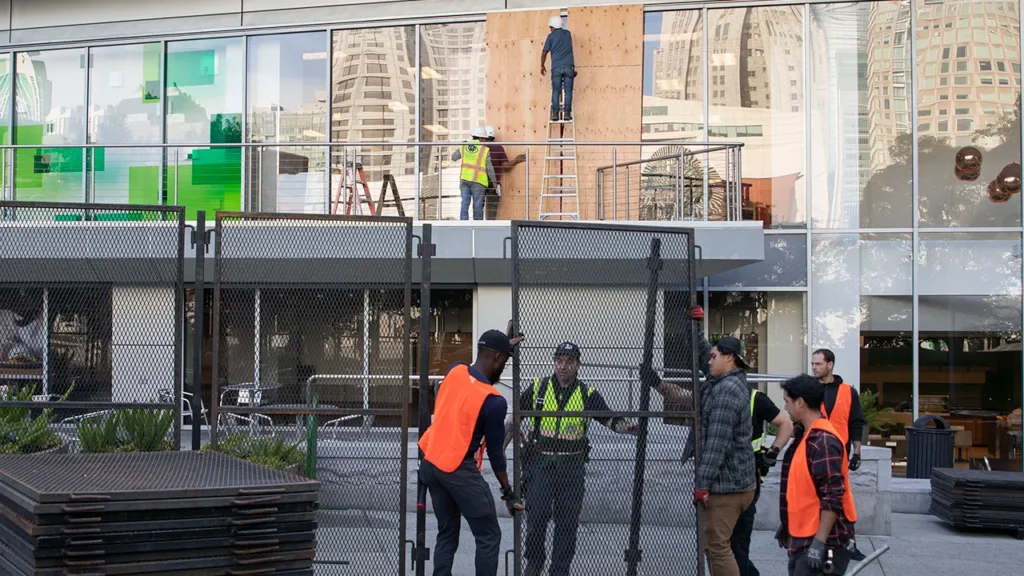
Setting clear physical boundaries, installing strong fencing, and directing pedestrian flow are the first steps toward creating a controlled environment. Proximity to public spaces increases the risk of unauthorized entry, so designing limited and monitored entry points, combined with warning signs and guidance systems, ensures project operations continue uninterrupted while protecting public safety.
Using digital surveillance systems, CCTV cameras, and proper lighting, even during the daytime, plays a key role in detecting potential threats and preventing unauthorized access. Combining these technologies with trained security personnel creates multiple layers of protection, minimizing risks effectively.
Coordinating Security Programs with Urban Regulations
Every construction project in the city must comply with safety standards, local regulations, and environmental requirements. Implementing a security program aligned with these regulations prevents sudden project halts, legal issues, and potential fines.
This coordination requires careful local risk assessment, identifying sensitive areas, and close collaboration between security teams, project managers, and city authorities. In this context, security is no longer a separate action but an integral part of professional project management.
Additionally, leveraging experiences from similar projects and proven solutions, such as effective security programs in high-density urban environments, helps develop a comprehensive strategy. This ensures the project proceeds with minimal risk and maximum coordination with the surrounding environment, protecting not only assets and materials but also project timelines and team productivity.
Common Threats in Urban Construction Projects
Theft of Equipment and Materials
Urban construction sites are particularly vulnerable to theft due to easy access and the high value of equipment. Specialized tools, light machinery, cables, metal materials, and even temporary electronic devices are often primary targets. Lack of continuous monitoring and proper logging of equipment can quickly result in significant financial losses and operational delays.
Preventive security measures, including 24-hour monitoring, CCTV surveillance, adequate lighting, and secure storage of materials, play a crucial role in reducing these risks. Additionally, accurate inventory tracking, along with standardized procedures for delivery and collection, supports better resource management and prevents misuse or theft.
Risks from Unauthorized Access
Unauthorized entry into construction sites poses not only asset threats but also serious safety hazards, legal liabilities, and potential project interruptions. This is particularly critical in large, multi-contractor projects where managing personnel access is more complex.
Establishing defined access levels, using digital identification systems, and monitoring employee and visitor movement help create an organized framework. Only authorized personnel are allowed in specific areas, and suspicious activity or unauthorized entry is immediately detected.
Combining human oversight with technology, such as periodic security patrols and digital monitoring, creates multiple protection layers that minimize theft and unauthorized access risks, allowing teams to focus confidently on project progress.
Key Strategies for Securing the Site
Establishing Combined Protective Layers
Effective construction site security arises from implementing multiple, coordinated layers of protection simultaneously. Combining trained security personnel, advanced monitoring technologies, and alert systems enables the team to quickly identify and respond to potential threats.
Human security staff can detect unusual behaviors, cover blind spots, and respond immediately during emergencies, while digital systems like CCTV cameras, motion sensors, and access control provide accurate tracking and documentation of events. This coordination ensures security does not rely solely on one tool or individual but operates as a comprehensive, resilient system.
Managing Access and Traffic Control
A critical aspect of site security is strict management of personnel, contractor, and vehicle access. This includes logging entries and exits, verifying permits, scheduling material deliveries, and monitoring equipment movement. Proper execution of these processes prevents disorder or misuse, keeping project operations organized and predictable.
Beyond security, traffic management directly impacts project productivity. When all activities are conducted within a structured and trackable framework, managers and contractors can focus on execution and deadlines, reducing operational disruptions. Thus, access control is both a security measure and an efficiency-enhancing tool.
Importance of Training and Team Coordination
To maximize the effectiveness of protective layers, continuous training of security personnel and coordination among security, operational, and management teams is essential. Training includes identifying high-risk areas, emergency response procedures, and interacting with monitoring technology.
When the entire security team is aligned, the protection system operates seamlessly, reducing errors or delays in responding to threats. This coordination ensures a safe project environment, allowing all activities, from material delivery to construction operations, to proceed with minimal risk and maximum efficiency.
Role of Security in Maintaining Project Timelines
Preventing Sudden Interruptions
Any security incident, whether equipment theft or unauthorized access, can lead to work stoppages, administrative investigations, or equipment replacement. These interruptions are not only costly but also significantly impact project schedules. Utilizing trained security guards and licensed security guards, along with professional security guard services, helps identify and control threats before they occur.
Deploying armed security guards or unarmed security guards, depending on project needs and equipment value, creates a secure and predictable environment. Moreover, implementing mobile patrol security and 24/7 security services ensures the site remains under constant supervision, even during off-hours, minimizing unexpected disruptions.
Integrating Security into Risk Management
In modern projects, security is a key component of risk management and overall project management. Security planning begins at the design stage and continues throughout project execution, incorporating construction site security, private security, corporate security, and industrial security measures.
This strategic approach anticipates potential threats, allowing preventive decision-making rather than reactive responses. Projects can proceed with minimal disruption and maximum efficiency, fully protecting investments in equipment, materials, and personnel.
Coordination between security guard companies and project managers ensures organized workflows, preventing delays and disorganization. Combining human presence with advanced security services guarantees operational safety and project schedule integrity, enabling teams to focus fully on achieving project objectives.
Linking San Francisco Security to the Northern California Region
San Francisco’s Role in Regional Construction Security Standards
Due to its high urban density, project value, and operational complexity, San Francisco is one of the most critical environments for construction site security in Northern California. Many regional security companies and providers first test their standards and protocols in projects here and then apply proven methods to other cities.
Urban challenges, crowded streets, tall buildings, and limited access, require trained personnel and advanced monitoring technologies such as 24-hour security services, mobile patrols, and professional security officers. This combination ensures protection against theft, unauthorized entry, and operational disruption, demonstrating that regional security success stems from urban experiences.
Path to Comprehensive Security Approaches
Analysis of San Francisco projects shows that effective security emerges when integrated into project management from the start, rather than as a reactive measure. Combining construction site security, private security firms, and licensed security officers allows for risk identification, access control, and monitoring of personnel and equipment.
This comprehensive approach ensures managers view security as part of overall project success, not just a separate protective layer. Additionally, successful San Francisco standards have been applied to other cities like Oakland, San Jose, and Sunnyvale, contributing to the development of industrial and corporate security principles across Northern California.
Understanding the regional security landscape enables the implementation of integrated, effective construction site security programs, allowing managers to proceed confidently and productively.
Conclusion
Security in San Francisco construction projects is not just about protecting high-value assets; it is a crucial tool for maintaining productivity, preventing delays, and creating a reliable, organized work environment. When properly designed and implemented, security allows projects to proceed smoothly, within budget, and with minimal risk, enabling teams to focus on their work and deadlines.
A professional approach to security turns it into a strategic investment, protecting assets, time, personnel, and project credibility simultaneously. Leveraging professional protective measures, including trained guards, continuous monitoring, access control, and advanced surveillance equipment, ensures the project is fully covered from start to finish.
To guarantee full protection and prevent disruption or loss, you can collaborate with the expert team at Alpha Eagle Security. Their professionals provide tailored security services, from strategy design to complete implementation of guarding, monitoring, and access control, ensuring your construction site remains safe. With Alpha Eagle Security, your projects will not only be secure but also see increased team productivity and significantly reduced operational risks.
Contact Alpha Eagle Security today to launch your customized security program and keep your project on the path to success.
Frequently Asked Questions
- What makes construction site security in San Francisco unique?
Construction projects in San Francisco face high urban density, easy public access, and high-value equipment. These factors increase the risk of theft, unauthorized access, and operational disruption, requiring professional security planning, trained guards, and advanced monitoring technologies. - What threats commonly target urban construction sites?
Equipment and material theft, unauthorized entry, vandalism, accidents due to insufficient supervision, and workflow interruptions are the primary threats. - How can theft of materials and equipment be prevented?
Using trained security guards, CCTV cameras, access control systems, proper lighting, and 24-hour monitoring reduces theft risk. - What’s the difference between armed and unarmed security guards on a construction site?
Armed guards are suitable for projects with high-value equipment and high-risk environments, while unarmed guards manage routine surveillance, access control, and daily security operations. - How can security help maintain project schedules?
By identifying threats before they occur, preventing sudden work stoppages, managing access, and providing continuous monitoring, security reduces operational disruptions and helps the project progress efficiently. - What are the benefits of using security technologies?
Video surveillance systems, electronic access control, mobile patrols, and online monitoring allow rapid threat detection, event logging, and reduced human error. - Should security be considered from the start of a project?
Yes, security planning should begin at the design and planning stages to integrate risk management and overall project success. - How can site security be aligned with local regulations and safety requirements?
By assessing local risks, following city standards and regulations, cooperating with local authorities, and implementing appropriate protective measures, proper alignment is achieved. - What security services are offered by companies like Alpha Eagle Security?
These companies provide professional guarding, mobile patrols, access control, video monitoring, armed and unarmed security, and customized security strategy design. - How can a custom security program for a construction project be implemented?
Through consultation with professional security teams, assessing project needs, and deploying a multi-layered strategy involving personnel, technology, and operational controls, full site security can be ensured.